
Rainwater Harvesting Systems Across Kent
Aquatic Landscapes Ltd designs and installs efficient rainwater harvesting systems for domestic and commercial clients across Kent. Rainwater harvesting allows property owners to collect, store, and reuse rainwater for irrigation, water features, and landscape management. Well-designed systems reduce reliance on mains water while supporting sustainable water use.
What Is Rainwater Harvesting?
Rainwater harvesting is the process of capturing rainwater from roofs and hard surfaces, storing it, and reusing it for non-potable applications. Harvested rainwater is commonly used for irrigation systems, ponds, water features, and landscape maintenance. This approach reduces water costs while making use of a natural and renewable resource.
Rainwater Harvesting Design & System Planning
Effective rainwater harvesting system design requires careful planning. We assess roof areas, rainfall levels, storage capacity, water demand, and site layout before specifying a system. Proper design ensures sufficient supply, efficient storage, and controlled distribution without unnecessary overflow or waste.
Professional Rainwater Harvesting Installation
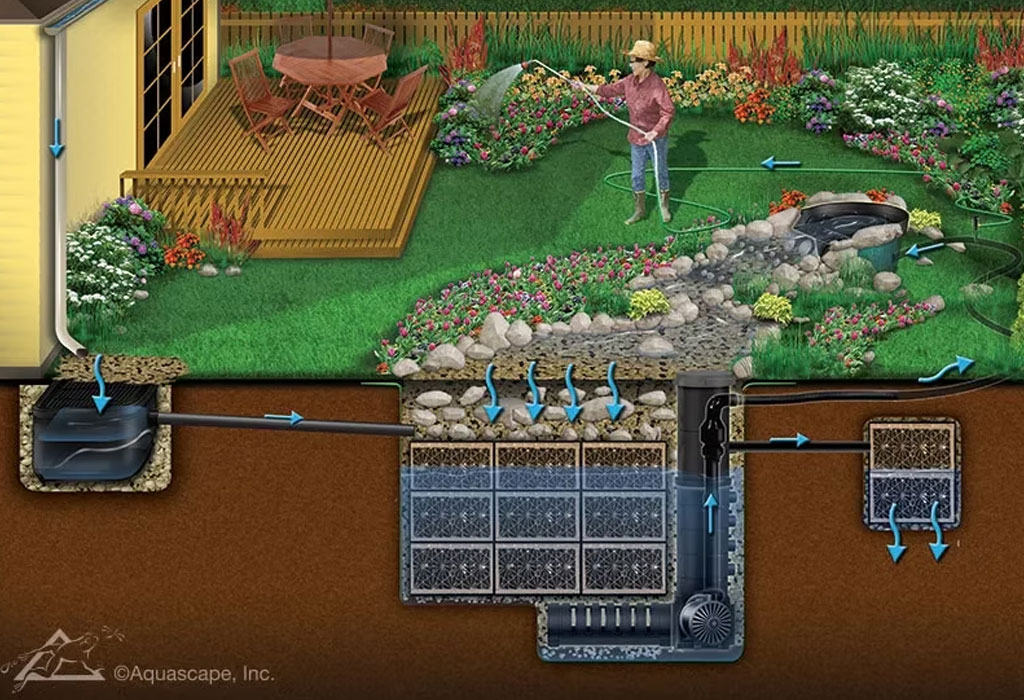
Our rainwater harvesting installation service covers system setup, storage tanks, filtration, pumps, and distribution pipework. Each system is installed to operate efficiently and integrate with existing irrigation systems, ponds, or water features. Installations are planned to allow safe access and straightforward maintenance.
Rainwater Storage, Filtration & Pump Systems
Reliable rainwater harvesting depends on effective storage and filtration. We install tanks, filters, and pump systems designed to protect water quality and maintain steady supply. Correct filtration prevents debris from entering irrigation systems or pond equipment, supporting long-term reliability.
Rainwater Harvesting for Irrigation & Landscapes
Harvested rainwater is ideally suited for irrigation systems, landscaped areas, and planted zones. Using rainwater for irrigation reduces demand on mains water supplies and supports consistent watering schedules. This makes rainwater harvesting particularly effective for estates, commercial sites, and large landscaped areas.
Our Rainwater Harvesting Services Include
- Rainwater harvesting system design
- Storage tank installation
- Filtration and debris management
- Pump and distribution systems
- Integration with irrigation systems
- Supply for ponds and water features
- System upgrades and expansions
- Commercial rainwater harvesting installations
Key Benefits of Rainwater Harvesting Systems
- Reduced reliance on mains water
- Lower water consumption costs
- Sustainable water management
- Improved irrigation efficiency
- Support for pond and water feature systems
- Reduced surface water runoff
- Long-term environmental benefits
- Reliable water supply for landscapes
Designed for Efficiency, Compliance & Long-Term Use
Every rainwater harvesting system is designed to operate efficiently and support long-term use. Correct system sizing, filtration, and pump selection help ensure reliable performance with minimal intervention. Planned maintenance keeps systems compliant, functional, and cost-effective.